
BPO EVOLUTION IN 2027
Discover BPO EVOLUTION IN 2027 and how AI, automation, medical coding, data processing, and modern outsourcing are transforming businesses.
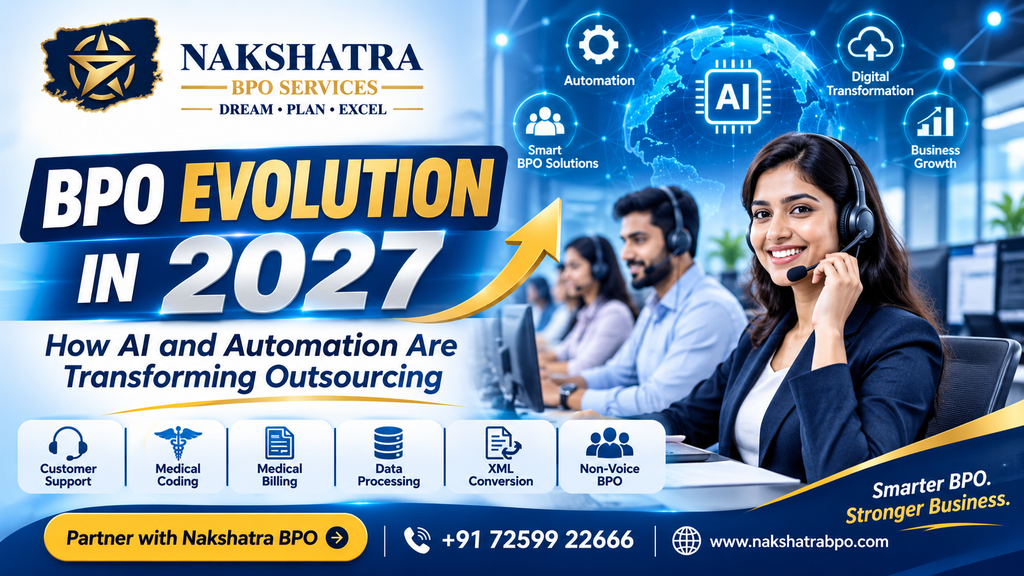
Is your business struggling to manage increasing operational costs, customer expectations, and time-consuming business processes? Traditional outsourcing methods are changing, and companies must adopt smarter solutions to remain competitive. Understanding the BPO EVOLUTION IN 2027 is essential for businesses looking to improve productivity, reduce operational pressure, and deliver better customer experiences. From artificial intelligence and automation to medical coding, data processing, and customer support, modern outsourcing is becoming more technology-driven. Businesses are also exploring digital marketing strategies, including google ads for business owners, to reach more customers and expand their services.
The Business Process Outsourcing (BPO) industry is moving beyond traditional call centers and repetitive back-office operations. Technology, skilled professionals, intelligent automation, and data-driven decision-making are creating new opportunities for outsourcing companies and their clients.
In this guide, we explore how BPO is evolving in 2027, the technologies transforming outsourcing, emerging industry opportunities, and how businesses can prepare for the next generation of BPO services.
What Is BPO Evolution in 2027?
BPO evolution in 2027 refers to the transformation of traditional business process outsourcing into technology-enabled, AI-assisted, and outcome-focused services. Modern BPO providers combine skilled professionals, automation, data analytics, and advanced digital tools to help businesses manage operations more efficiently.
The transformation includes customer support, medical billing, medical coding, data entry, document processing, back-office management, and other specialized business services.
Instead of focusing only on reducing labor costs, modern outsourcing focuses on improving accuracy, productivity, customer satisfaction, scalability, and business performance.
1. Artificial Intelligence Is Transforming the BPO Industry
Artificial Intelligence (AI) is one of the major forces reshaping the outsourcing industry.
Traditional BPO operations often depend on employees manually handling repetitive tasks. AI-powered technologies can now assist with information processing, customer interactions, document analysis, and workflow management.
How AI is changing BPO operations:
- AI chat bots can answer common customer questions.
- Intelligent systems can classify and process documents.
- AI-assisted tools can summarize customer conversations.
- Automated workflows can reduce repetitive manual activities.
- Predictive analytics can help identify operational patterns.
- AI-powered quality monitoring can support service improvement.
For example, a customer support company can use AI
to identify the purpose of incoming queries and direct customers to the appropriate support team.
However, human expertise remains important for complex requests, sensitive decisions, customer relationships, and quality assurance.
The future of BPO is not simply about replacing people with machines. It is about combining human intelligence with technology to deliver better outcomes.
2. Automation and Robotic Process Automation (RPA)
Automation is helping BPO companies improve operational efficiency by reducing repetitive manual work.
Robotic Process Automation (RPA) uses software bots to perform structured, rule-based tasks that employees would otherwise complete manually.
Common applications of RPA in BPO:
- Data entry and validation
- Invoice processing
- Document classification
- Customer information updates
- Report generation
- Appointment scheduling
- Data transfer between business applications
For example, an organization handling thousands of invoices can use RPA to extract information, validate specific fields, and organize records for further processing.
Benefits of automation:
- Reduces repetitive manual work.
- Improves processing consistency.
- Supports faster workflows.
- Helps minimize avoidable human errors.
- Allows employees to focus on more complex activities.
In 2027, successful BPO operations will increasingly combine automation with employee supervision and clearly defined quality-control processes.
3. The Rise of Non-Voice and Back-Office Outsourcing
BPO is no longer limited to traditional voice-based customer service.
Many organizations require specialized non-voice services to manage information, documents, customer requests, and administrative activities.
Non-voice outsourcing allows businesses to delegate operational tasks without requiring every interaction to happen over a phone call.
Popular non-voice BPO services:
Email Support: Managing customer inquiries, complaints, and service requests through email.
Chat Support: Assisting customers through live chat and messaging platforms.
Data Entry: Entering, organizing, and updating business information.
Data Processing: Collecting, validating, formatting, and managing large volumes of information.
Document Management: Organizing, digitizing, and maintaining business records.
Back-Office Support: Handling administrative activities, reporting, and operational processes.
The demand for flexible and specialized non-voice services creates opportunities for businesses that want to outsource routine operations while maintaining control over their core activities.
4. Medical Coding and Medical Billing Are Becoming More Technology-Driven
Healthcare outsourcing is an important specialized area of BPO.
Hospitals, clinics, healthcare providers, and medical organizations manage large volumes of patient records, billing information, and insurance documentation.
Medical billing and coding services help healthcare organizations manage important administrative and revenue-cycle activities.
What is medical coding?
Medical coding involves translating healthcare diagnoses, procedures, and services into standardized codes using applicable coding systems.
Accurate coding supports medical documentation, insurance claims, and healthcare administration.
What is medical billing?
Medical billing involves preparing, submitting, and managing healthcare claims and payment-related activities.
Common activities include:
- Patient information verification
- Insurance eligibility checks
- Charge entry
- Medical claim submission
- Payment posting
- Denial management
- Accounts receivable follow-up
How technology is transforming healthcare BPO:
- Automated document extraction can assist with data capture.
- AI-assisted tools can identify missing information.
- Workflow systems can support claim tracking.
- Analytics can help identify denial patterns.
- Digital platforms can improve information accessibility.
However, healthcare processes require appropriate privacy safeguards, trained professionals, and human review. Automated systems should not replace necessary clinical or coding judgment.
5. Data Entry and Data Processing Are Becoming Smarter
Businesses generate enormous amounts of information through customers, transactions, applications, and daily operations.
Managing this information accurately is essential for informed business decisions.
Traditional data entry relies heavily on manual input. Modern BPO operations increasingly use OCR (Optical Character Recognition), intelligent document processing, validation tools, and automated workflows.
Important data entry and processing activities:
- Customer database management
- Form processing
- Invoice data extraction
- Spreadsheet management
- Document digitization
- Data cleansing
- Information validation
- Record updating
Why businesses outsource data processing:
Outsourcing can help organizations manage large workloads, access specialized teams, improve operational flexibility, and reduce the need to build every support function internally.
The BPO evolution in 2027 will increasingly involve combining automated information extraction with employee verification to maintain data accuracy and reliability.
6. Customer Experience Is Becoming a Major BPO Priority
Customer experience is one of the most important factors influencing business growth and customer retention.
Customers expect quick responses, accurate information, convenient communication channels, and personalized assistance.
Modern BPO providers are therefore moving towards multichannel customer support.
What is multichannel customer support?
Multichannel support connects multiple customer communication channels into a more consistent service experience.
These channels may include:
- Phone calls
- Live chat
- Social media
- Messaging platforms
- Customer service portals
For example, a customer may initially contact a company through live chat and later follow up through email. An integrated support system can help employees access the relevant conversation history and provide more consistent assistance.
How BPO companies can improve customer experience:
- Reduce unnecessary response delays.
- Train employees in communication skills.
- Maintain consistent support quality.
- Use customer feedback to improve processes.
- Provide support across relevant communication channels.
- Combine AI assistance with human interaction.
In 2027, customer experience will be an important differentiation for outsourcing providers.
7. Data Security and Compliance Will Become Essential
As BPO companies handle sensitive customer, financial, healthcare, and business information, data security becomes a critical responsibility.
Outsourcing providers must establish appropriate security controls to protect client information.
Important data security practices:
- Role-based access control
- Multi-factor authentication
- Data encryption
- Secure file-sharing systems
- Employee security training
- Regular security assessments
- Backup and recovery procedures
- Incident response planning
BPO companies serving international clients may also need to follow applicable privacy and industry regulations, depending on the data they process and the countries involved.
For healthcare-related outsourcing, providers handling protected health information for US-regulated entities may have obligations under HIPAA and applicable business associate agreements.
Security should be considered throughout the outsourcing life cycle, from initial on boarding to daily operations and contract termination.
8. Cloud Technology Is Changing Outsourcing Operations
Cloud computing allows businesses to access software, information, and digital resources through internet-based infrastructure.
It helps BPO companies support distributed teams, centralized workflows, and flexible operational models.
Benefits of cloud-based BPO operations:
- Easier access to authorized business systems
- Flexible team collaboration
- Centralized information management
- Improved workflow coordination
- Salable computing resources
- Support for remote operations
Cloud platforms can also integrate with customer relationship management (CRM) systems, help desk software, workflow tools, and reporting applications.
However, cloud adoption requires appropriate access controls, vendor assessments, data protection measures, and backup strategies.
9. Human Skills Will Remain Important in the Future of BPO
Although automation is transforming outsourcing, human skills continue to play an essential role.
Technology can support repetitive and structured activities, but many business processes require communication, judgment, problem-solving, and specialized knowledge.
Important skills for BPO professionals in 2027:
- Verbal and written communication
- Critical thinking
- Customer relationship management
- Data handling and accuracy
- Technical knowledge
- Problem-solving
- Adaptability
- AI tool awareness
- Time management
BPO companies should invest in continuous employee training to help their teams adapt to changing technology and client expectations.
The most effective outsourcing environments will combine capable employees with tools that improve their productivity.
10. Outcome-Based Outsourcing Is Gaining Importance
Traditional outsourcing agreements often focused on the number of employees, working hours, or volume of completed tasks.
Modern businesses increasingly want measurable improvements in their outsourced operations.
This is encouraging a shift towards outcome-based outsourcing models.
What is outcome-based outsourcing?
Outcome-based outsourcing is a service arrangement in which the provider’s performance is evaluated against agreed business results and service-level measures.
Depending on the process, these may include:
- Processing accuracy
- Resolution time
- Customer satisfaction
- Turnaround time
- Productivity
- Quality scores
- Compliance performance
For example, a company outsourcing customer support may evaluate its provider using agreed response times, resolution rates, customer satisfaction, and quality standards.
Clear service-level agreements (SLAs), transparent reporting, and realistic performance targets are essential for successful partnerships.
11. How Google Ads for Business Owners Can Support BPO Growth
The BPO industry is becoming more competitive, and outsourcing providers need effective ways to reach potential clients.
Alongside business networking, referrals, and content marketing, digital advertising can help BPO companies generate awareness and attract qualified inquiries.
Google ads for business owners can support promotional campaigns targeting companies searching for outsourcing services, data processing, customer support, or specialized business solutions.
How BPO companies can use Google Ads:
- Target relevant outsourcing-related search keywords.
- Create dedicated landing pages for individual services.
- Focus campaigns on appropriate business locations.
- Use clear calls to action such as Request a Quote or Contact Our Team.
- Track qualified leads and conversions.
- Review campaign performance and optimize advertising budgets.
For example, a BPO provider can create separate campaigns for medical coding, data processing, non-voice support, and customer service outsourcing.
Google Ads and SEO serve different purposes. Paid advertising can generate additional visibility, while organic SEO helps build long-term search visibility. Running advertisements does not directly improve organic Google rankings.
12. What Should Businesses Look for in a BPO Partner in 2027?
Choosing the right outsourcing partner is important for operational efficiency, service quality, and long-term business relationships.
A suitable BPO provider should understand your business requirements and demonstrate the ability to manage the agreed processes securely and consistently.
Important factors to evaluate:
Industry Experience: Look for relevant experience in your business sector and service requirements.
Skilled Workforce: Evaluate employee training, process knowledge, and communication capabilities.
Technology Infrastructure: Understand the provider’s software, automation tools, and operational systems.
Data Security: Review access controls, privacy practices, and relevant compliance arrangements.
Quality Assurance: Ask about quality monitoring, error management, and reporting.
Scalability: Ensure the provider can accommodate changing workloads and business requirements.
Communication: Establish clear reporting structures, escalation procedures, and service expectations.
Selecting the right outsourcing partner can help businesses focus more attention on their core operations.
Key BPO Trends to Watch in 2027
The future of outsourcing will be influenced by technology, specialized services, and changing customer expectations.
Here are important developments businesses should watch:
| BPO trend | Expected business impact |
|---|---|
| Artificial Intelligence | Supports information processing and employee productivity |
| Robotic Process Automation | Reduces repetitive manual activities |
| Non-Voice Outsourcing | Expands digital customer support services |
| Healthcare BPO | Supports specialized medical administration |
| Intelligent Data Processing | Improves document and information workflows |
| Omnichannel Support | Creates more consistent customer experiences |
| Cloud-Based Operations | Supports flexible and distributed workflows |
| Data Security | Strengthens protection of business information |
| Workforce Upskilling | Prepares employees for technology-enabled operations |
| Outcome-Based Models | Focuses on measurable service performance |
These trends represent likely directions for the industry, not guaranteed outcomes for every BPO company. Adoption will vary depending on budgets, regulations, technology readiness, and client requirements.
Frequently Asked Questions About BPO Evolution in 2027
1. What is the future of the BPO industry in 2027?
The BPO industry is expected to become more technology-driven through AI assistance, automation, cloud platforms, specialized outsourcing, and data analytics. Human expertise will continue to support complex operations and customer interactions.
2. Will AI replace BPO employees in 2027?
AI is likely to automate or assist with certain repetitive tasks, but it will not eliminate the need for all BPO employees. Communication, problem-solving, quality assurance, specialized knowledge, and human decision-making will remain important.
3. What are the major BPO services in 2027?
Major BPO services include customer support, voice and non-voice operations, medical billing, medical coding, data entry, data processing, document management, and back-office administration.
4. Why is automation important in BPO?
Automation helps BPO companies manage repetitive tasks, improve workflow consistency, support faster processing, and allow employees to focus on more complex activities.
5. Is medical coding a growing opportunity in BPO?
Medical coding is a specialized healthcare administrative service. Healthcare organizations need accurate coding and documentation processes to support claims and revenue-cycle operations. Demand and outsourcing opportunities depend on healthcare market conditions, regulatory requirements, and client needs.
6. What is the difference between voice and non-voice BPO?
Voice BPO involves customer interactions through telephone calls, while non-voice BPO includes email support, chat support, data entry, document processing, and other activities that do not primarily require phone conversations.
7. How can small businesses benefit from BPO services?
Small businesses can outsource selected administrative and operational activities to access additional expertise, manage workloads, improve flexibility, and focus on their core business functions.
8. How do businesses choose the right BPO company?
Businesses should evaluate service experience, workforce skills, technology infrastructure, data security, quality assurance, scalability, communication, and agreed service-level commitments.
Why Choose Nakshatra BPO for Your Business Process Requirements?
As businesses adapt to changing technology and customer expectations, choosing a reliable outsourcing partner becomes increasingly important.
Nakshatra BPO focuses on business support and outsourcing solutions that help organizations manage essential operational activities.
Whether your requirements involve medical coding, medical billing, XML conversion, data entry and processing, BPO and non-voice support, or related business processes, the right service partner can help streamline workflows and support your operational goals.
By combining skilled professionals, structured processes, and technology-enabled solutions, businesses can build a more flexible approach to managing their operations.
Explore our website to learn more about our services:
Conclusion: Embrace the BPO Evolution in 2027 and Prepare for the Future
The BPO EVOLUTION IN 2027 represents an important shift in how businesses manage their operations. Artificial intelligence, automation, medical coding, data processing, cloud technology, and customer experience are transforming traditional outsourcing models.
Businesses that combine technology with skilled professionals, strong data security, and effective quality management will be better positioned to adapt to changing operational requirements.
BPO is no longer just about outsourcing repetitive tasks. It is about building smarter, more flexible, and efficient business processes.
If you found this guide useful, share it with business owners, healthcare professionals, entrepreneurs, and outsourcing decision-makers who want to understand the future of BPO.
We would love to hear your feedback!
Which development do you think will have the biggest impact on the BPO industry in 2027: Artificial Intelligence, Automation, Medical Coding, or Non-Voice Outsourcing?
Share your thoughts in the comments and let us know which BPO topic you would like us to cover next.
Looking for reliable BPO support for your business? Contact Nakshatra BPO today!
Website: https://nakshatrabpo.com/
Contact Number: +91 72599 22666